Thursday, 27 December 2018

Gfycat’s ‘GIFs’ can now keep the sound on

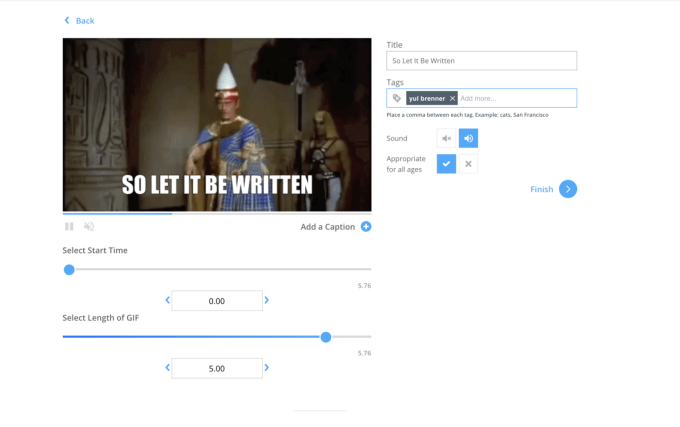
Gfycat, a home for GIF-making tools and an online community, is rolling out a new way to create GIFs — it will now let you keep the sound on. With “Gfycat Sound,” as the feature is called, GIF makers will have the option to retain the audio from the video file they’re using to create their “GIF” — something Gfycat believes will be especially popular among gamers.

The company had already experimented with other types of non-traditional GIFs, like longer GIFs, AR GIFs, HD GIFs and 360 GIFs, for example, in order to evolve the concept of the GIF beyond the classic, grainy loop.

Of course, the resulting GIFs aren’t “.gifs” at this point — they’re short-form videos.

The same holds true for “Gfycat Sound.” But end users don’t necessarily care about the GIFs’ technical underpinnings — they just want to create and share short clips pulled from longer pieces of content.

The company says it decided to roll out support for sound after polling its community for their top feature requests earlier this year. “GIFs with sound” came back as the top demand from users.

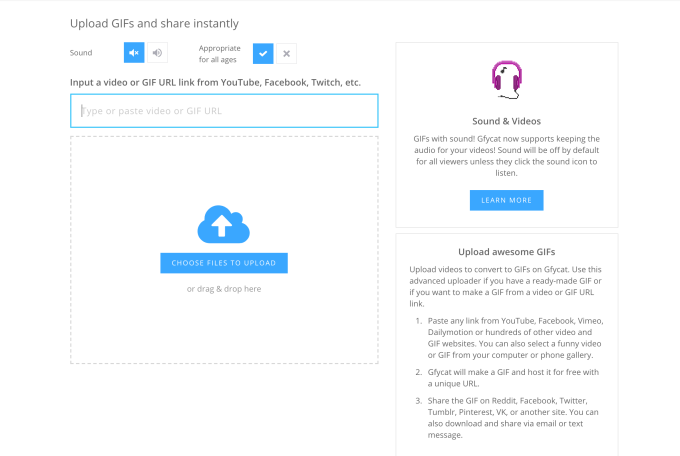
To take advantage of the added support, GIF creators will be able to toggle a switch in Gfycat’s upload tool to keep the sound on or remove it before creating their GIF. As before, GIFs can be created using a video file you upload, or through a link you paste from a site like YouTube, Facebook, Twitch or elsewhere. And if users upload a .gif file or a video that doesn’t have sound, the software will detect that on its end.

The GIF editing software lets you select the start and stop times for the GIF and add captions before sharing, as well.

Once the GIF is uploaded to Gfycat’s site, users will be able to view the audio GIFs while browsing by clicking the icon on the top-right of the GIF to turn the sound on. (The site will default to sound off, thankfully – you won’t all of a sudden be bombarded with noise.)

These new “audio GIFs” work on all mobile and desktop browsers at launch, and will come to Gfycat’s iOS and Android apps in 2019, as well as to its API documentation for developers.

“We see our creators using gaming first and foremost for Gfycat Sound, as e-sports has become a global phenomenon,” explains Gfycat CEO Richard Rabbat. “Now, a gamer can share their achievement with the sound of the ‘shot’ that won her or him the game and achieve more virality for their content,” he says. “We also see our sports content benefiting from Gfycat Sound because you can now share the emotions of the audience,” Rabbat added.

via Gfycat

While an actual GIF file cannot have sound, Gfycat is not the first GIF toolmaker that has expanded to include short-form video alongside its traditional collection of .gifs — Imgur did the same back in May. The reasoning in that case was similar — sometimes you need to hear the clip to really enjoy the content. Plus, advertisers love video, too.

Despite their silly nature, GIFs are a big business these days. Google acquired top GIF platform Tenor earlier this year. At the time, the company was seeing more than 12 billion searches per month.

Gfycat in April said it had 180 million monthly active users, and 500 million page views.


source https://techcrunch.com/2018/12/27/gfycats-gifs-can-now-keep-the-sound-on/

Monday, 24 December 2018

My product launch wishlist for Instagram, Twitter, Uber and more

‘Twas the night before Xmas, and all through the house, not a feature was stirring from the designer’s mouse . . . Not Twitter! Not Uber, Not Apple or Pinterest! On Facebook! On Snapchat! On Lyft or on Insta! . . . From the sidelines I ask you to flex your code’s might. Happy Xmas to all if you make these apps right.

Instagram

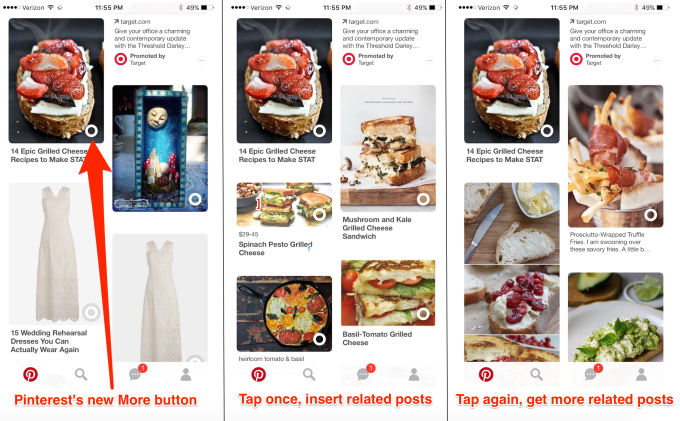
See More Like This – A button on feed posts that when tapped inserts a burst of similar posts before the timeline continues. Want to see more fashion, sunsets, selfies, food porn, pets, or Boomerangs? Instagram’s machine vision technology and metadata would gather them from people you follow and give you a dose. You shouldn’t have to work through search, hashtags, or the Explore page, nor permanently change your feed by following new accounts. Pinterest briefly had this feature (and should bring it back) but it’d work better on Insta.

Web DMs – Instagram’s messaging feature has become the defacto place for sharing memes and trash talk about people’s photos, but it’s stuck on mobile. For all the college kids and entry-level office workers out there, this would make being stuck on laptops all day much more fun. Plus, youth culture truthsayer Taylor Lorenz wants Instagram web DMs too.

Upload Quality Indicator – Try to post a Story video or Boomerang from a crummy internet connection and they turn out a blurry mess. Instagram should warn us if our signal strength is low compared to what we usually have (since some places it’s always mediocre) and either recommend we wait for Wi-Fi, or post a low-res copy that’s replaced by the high-res version when possible.

Oh, and if new VP of product Vishal Shah is listening, I’d also like Bitmoji-style avatars and a better way to discover accounts that shows a selection of their recent posts plus their bio, instead of just one post and no context in Explore which is better for discovering content.

Twitter

DM Search – Ummm, this is pretty straightforward. It’s absurd that you can’t even search DMs by person, let alone keyword. Twitter knows messaging is a big thing on mobile right? And DMs are one of the most powerful ways to get in contact with mid-level public figures and journalists. PS: My DMs are open if you’ve got a news tip — @JoshConstine.

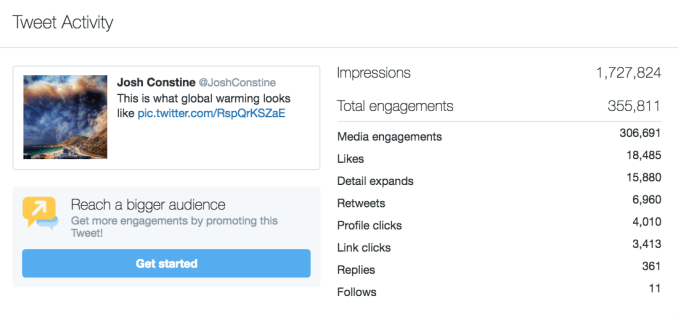
Unfollow Suggestions – Social networks are obsessed with getting us to follow more people, but do a terrible job of helping us clean up our feeds. With Twitter bringing back the option to see a chronological feed, we need unfollow suggestions more than ever. It should analyze who I follow but never click, fave, reply to, retweet, or even slow down to read and ask if I want to nix them. I asked for this 5 years ago and the problem has only gotten worse. Since people feel like their feeds are already overflowing, they’re stingy with following new people. That’s partly why you see accounts get only a handful of new followers when their tweets go viral and are seen by millions. I recently had a tweet with 1.7 million impressions and 18,000 Likes that drove just 11 follows. Yes I know that’s a self-own.

Analytics Benchmarks – If Twitter wants to improve conversation quality, it should teach us what works. Twitter offers analytics about each of your tweets, but not in context of your other posts. Did this drive more or fewer link clicks or follows than my typical tweet? That kind of info could guide users to create more compelling content.

Facebook

(Obviously we could get into Facebook’s myriad problems here. A less sensationalized feed that doesn’t reward exaggerated claims would top my list. Hopefully its plan to downrank “borderline content” that almost violates its policies will help when it rolls out.)

Batched Notifications – Facebook sends way too many notifications. Some are downright useless and should be eliminated. “14 friends responded to events happening tomorrow”? “Someone’s fundraiser is half way to its goal?” Get that shit out of here. But there are other notifications I want to see but that aren’t urgent nor crucial to know about individually. Facebook should let us decide to batch notifications so we’d only get one of a certain type every 12 or 24 hours, or only when a certain number of similar ones are triggered. I’d love a digest of posts to my Groups or Events from the past day rather than every time someone opens their mouth.

I so don’t care

Notifications In The “Time Well Spent” Feature – Facebook tells you how many minutes you spent on it each day over the past week and on average, but my total time on Facebook matters less to me than how often it interrupts my life with push notifications. The “Your Time On Facebook” feature should show how many notifications of each type I’ve received, which ones I actually opened, and let me turn off or batch the ones I want fewer of.

Oh, and for Will Cathcart, Facebook’s VP of apps, can I also get proper syncing so I don’t rewatch the same Stories on Instagram and Facebook, the ability to invite people to Events on mobile based on past invite lists of those I’ve hosted or attended, and the See More Like This feature I recommended for Instagram?

Uber/Lyft/Ridesharing

“Quiet Ride” Button – Sometimes you’re just not in the mood for small talk. Had a rough day, need to get work done, or want to just zone out? Ridesharing apps should offer a request for a quiet ride that if the driver accepts, you pay them an extra dollar (or get it free as a loyalty perk), and you get ferried to your destination without unnecessary conversation. I get that it’s a bit dehumanizing for the driver, but I’d bet some would happily take a little extra cash for their compliance.

“I Need More Time” Button – Sometimes you overestimate the ETA and suddenly your car is arriving before you’re ready to leave. Instead of cancelling and rebooking a few minutes later, frantically rushing so you don’t miss your window and get smacked with a no-show fee, or making the driver wait while they and the company aren’t getting paid, Uber, Lyft, and the rest should offer the “I Need More Time” button that simply rebooks you a car that’s a little further away.

Spotify/Music Streaming Apps

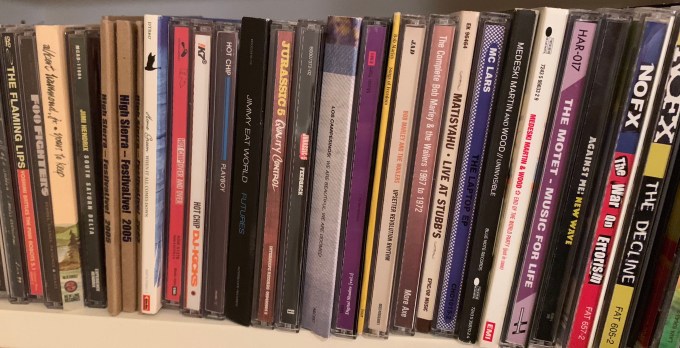
Scan My Collection – I wish I could just take photos of the album covers, spines, or even discs of my CD or record collection and have them instantly added to a playlist or folder. It’s kind of sad that after lifetimes of collecting physical music, most of it now sits on a shelf and we forget to play what we used to love. Music apps want more data on what we like, and it’s just sitting there gathering dust. There’s obviously some fun viral potential here too. Let me share what’s my most embarrassing CD. For me, it’s my dual copies of Limp Bizkit’s “Significant Other” because I played the first one so much it got scratched.

Friends Weekly – Spotify ditched its in-app messaging, third-party app platform, and other ways to discover music so its playlists would decide what becomes a hit in order to exert leverage over the record labels to negotiate better deals. But music discovery is inherently social and the desktop little ticker of what friends are playing on doesn’t cut it. Spotify should let me choose to recommend my new favorite song or agree to let it share what I’ve recently played most, and put those into a Discover Weekly-style social playlist of what friends are listening to.

Snapchat

Growth – I’m sorry, I had to.

Bulk Export Memories – But seriously, Snapchat is shrinking. That’s worrisome because some users’ photos and videos are trapped on its Memories cloud hosting feature that’s supposed to help free up space on your phone. But there’s no bulk export option, meaning it could take hours of saving shots one at a time to your camera roll if you needed to get off of Snapchat, if for example it was shutting down, or got acquired, or you’re just bored of it.

Add-On Cameras – Snapchat’s Spectacles are actually pretty neat for recording first-person or underwater shots in a circular format. But otherwise they don’t do much more, and in some ways do much less, than your phone’s camera and are a long way from being a Magic Leap competitor. That’s why if Snapchat really wants to become a “Camera Company”, it should build sleek add-on cameras that augment our phone’s hardware. Snap previously explored selling a 360-camera but never launched one. A little Giroptic iO-style 360 lens that attaches to your phone’s charging port could let you capture a new kind of content that really makes people feel like they’re there with you. An Aukey Aura-style zoom lens attachment that easily fits in your pocket unlike a DSLR could also be a hit

iOS

Switch Wi-Fi/Bluetooth From Control Center – I thought the whole point of Control Center was one touch access, but I can only turn on or off the Wi-Fi and Bluetooth. It’s silly having to dig into the Settings menu to switch to a different Wi-Fi network or Bluetooth device, especially as we interact with more and more of them. Control Center should unfurl a menu of networks or devices you can choose from.

Shoot GIFs – Live Photos are a clumsy proprietary format. Instagram’s Boomerang nailed what we want out of live action GIFs and we should be able to shoot them straight from the iOS camera and export them as actual GIFs that can be used across the web. Give us some extra GIF settings and iPhones could have a new reason for teens to choose them over Androids.

Gradual Alarms – Anyone else have a heart attack whenever they hear their phone’s Alarm Clock ringtone? I know I do because I leave my alarms on so loud that I’ll never miss them, but end up being rudely shocked awake. A setting that gradually increases the volume of the iOS Alarm Clock every 15 seconds or minute so I can be gently arisen unless I refuse to get up.

Maybe some of these apply to Android, but I wouldn’t know because I’m a filthy casual iPhoner. Send me your Android suggestions, as well as what else you want to see added to your favorite apps.

[Image Credit: Hanson Inc]


source https://techcrunch.com/2018/12/24/all-i-want-for-christmas/

Convo now lets you see which employees got the memo

Convo, a tool perhaps best described as a real-time company message board, picked up a new trick this week: automated acknowledgements.

It’s a pretty common thing in the corporate world: you need to send something out to all of the employees at your company, but you also need to know exactly who has seen it (and, of course, who hasn’t.) Who actually got the memo? Can you say that everyone has seen some mandatory reading? Who still needs to see it?

You can try to use email read receipts, but those are hit-or-miss — particularly as many email clients disable them by default nowadays. You can make everyone sign a form saying they’ve seen the document in question, but that’s a pain in the butt. When all you need is a list that says “Yep, these employees have all seen this blurb of text” so you can meet some new compliance requirement, it shouldn’t be complicated.

Convo’s new tool makes it pretty easy: write your post like any other, but check the “Recipients must acknowledge to view” box before sending it out.

When it pops up in your colleagues’ Convo timeline, it’ll be almost entirely blurred, save for a subject line and a prompt asking them to acknowledge the post. Once they deliberately acknowledge it, the post is de-blurred, the original poster gets an alert letting them know someone has read it, and the reader’s name moves from the “Has not seen” to the “Has seen” list.

To be clear, this isn’t a security feature; there are ways to get around the blurring without officially acknowledging it. Hell, you can just say “Hey Jim, did you already open that Convo post? Let me see it on your phone.” The point here isn’t preventing anyone in the company from seeing something, but in making sure everyone has seen something, and having an automatically generated list to fulfill any compliance requirements. If you’re using Convo’s group features correctly, it should only show up for people you intend to see it in the first place.

The feature rolled out earlier this week. It’ll be available for all Convo networks for the next month to check out, at which point they expect to limit it to Enterprise-level customers.


source https://techcrunch.com/2018/12/21/convo-now-lets-you-see-which-employees-got-the-memo/

Captiv8 report highlights data for spotting fake followers

Captiv8, a company offering tools for brands to manage influencer marketing campaigns, has released its 2018 Fraud Influencer Marketing Benchmark Report. The goal is to give marketers the data they need to spot fake followers — and thus, to separate the influencers with a real following from those who only offer the illusion of engagement.

The report argues that that this a problem with a real financial impact (it’s something that Instagram is working to crack down on), with $2.1 billion spent on influencer marketing on Instagram in 2017 and 11 percent of the engagement coming from fraudulent accounts.

“For influencer marketing to truly deliver on its transformative potential, marketers need a more concrete and reliable way to identify fake followers and engagement, compare their performance to industry benchmarks, and determine the real reach and impact of social media spend,” Captiv8 says.

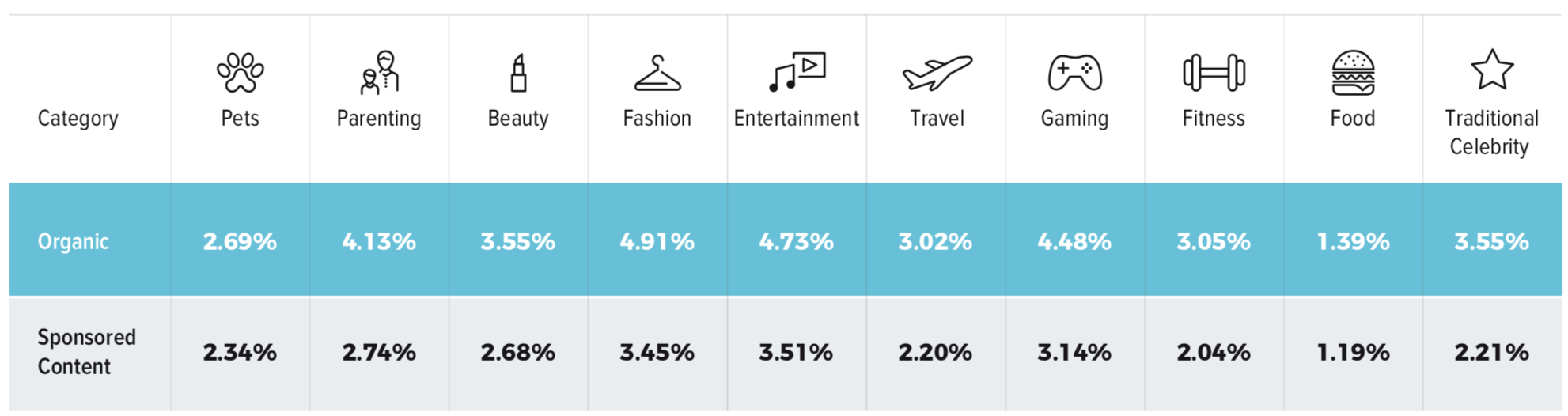
So the company looked at a range of marketing categories (pets, parenting, beauty, fashion, entertainment, travel, gaming, fitness, food and traditional celebrity) and randomly selected 5,000 Instagram influencer accounts in each one, pulling engagement from August to November of this year.

The idea is to establish a baseline for standard activity, so that marketers can spot potential red flags. Of course, everyone with a significant social media audience is going to have some fake followers, but Captiv8 suggests that some categories have a higher rate of fraud than others — fashion was the worst, with an average of 14 percent of fake activity per account, to compared to traditional celebrity, where the average was just 4 percent.

Captiv8 report

So what should you look out for? For starters, the report says that the average daily change in follower counts for an influencer is 1.2 percent, so be on the look out for shifts that are significantly larger.

The report also breaks down the average engagement rate for organic and sponsored content by category (ranging from 1.19 percent for sponsored content in food to 3.51 percent in entertainment), and suggests that a lower engagement rate “shows a high probability that their follower count is inflated through bots or fake followers.”

Conversely, it says it could also be a warning sign if a creator’s audience reach or impressions per user is higher than the industry benchmarks (for example, image posts in fashion have an average audience reach of 23.69 percent, with 1.32 impressions per unique user).

You can download the full report on the Captiv8 website.


source https://techcrunch.com/2018/12/24/captiv8-fake-follower-report/

Facebook is not equipped to stop the spread of authoritarianism

After the driver of a speeding bus ran over and killed two college students in Dhaka in July, student protesters took to the streets. They forced the ordinarily disorganized local traffic to drive in strict lanes and stopped vehicles to inspect license and registration papers. They even halted the vehicle of the Chief of Bangladesh Police Bureau of Investigation and found that his license was expired. And they posted videos and information about the protests on Facebook.

The fatal road accident that led to these protests was hardly an isolated incident. Dhaka, Bangladesh’s capital, which was ranked the second least livable city in the world in the Economist Intelligence Unit’s 2018 global liveability index, scored 26.8 out of 100 in the infrastructure category included in the rating. But the regional government chose to stifle the highway safety protests anyway. It went so far as raids of residential areas adjacent to universities to check social media activity, leading to the arrest of 20 students. Although there were many images of Bangladesh Chhatra League, or BCL men, committing acts of violence on students, none of them were arrested. (The BCL is the student wing of the ruling Awami League, one of the major political parties of Bangladesh.)

Students were forced to log into their Facebook profiles and were arrested or beaten for their posts, photographs, and videos. In one instance, BCL men called three students into the dorm’s guestroom, quizzed them over Facebook posts, beat them, and then handed them over to police. They were reportedly tortured in custody.

A pregnant school teacher was arrested and jailed for just over two weeks for “spreading rumors” due to sharing a Facebook post about student protests. A photographer and social justice activist spent more than 100 days in jail for describing police violence during these protests; he told reporters he was beaten in custody. And a university professor was jailed for 37 days for his Facebook posts.

A Dhaka resident who spoke on the condition of anonymity out of fear for their safety said that the crackdown on social media posts essentially silenced student protesters, many of which removed photos, videos, and status updates about the protests from their profiles entirely. While the person thought that students were continuing to be arrested, they said, “nobody is talking about it anymore — at least in my network — because everyone kind of ‘got the memo’ if you know what I mean.”

This isn’t the first time Bangladeshi citizens have been arrested for Facebook posts. As just one example, in April 2017, a rubber plantation worker in southern Bangladesh was arrested and detained for three months for liking and sharing a Facebook post that criticized the prime minister’s visit to India, according to Human Rights Watch.

Bangladesh is far from alone. Government harassment to silence dissent on social media has occurred across the region and in other regions as well — and it often comes hand-in-hand with governments filing takedown requests with Facebook and requesting data on users.

Facebook has removed posts critical of the prime minister in Cambodia and reportedly “agreed to coordinate in the monitoring and removal of content” in Vietnam. Facebook was criticized for not stopping the repression of Rohingya Muslims in Myanmar, where military personnel created fake accounts to spread propaganda which human rights groups say fueled violence and forced displacement. Facebook has since undertaken a human rights impact assessment in Myanmar, and it has also taken down coordinated inauthentic accounts in the country.

UNITED STATES – APRIL 10: Facebook CEO Mark Zuckerberg testifies during the Senate Commerce, Science and Transportation Committee and Senate Judiciary Committee joint hearing on “Facebook, Social Media Privacy, and the Use and Abuse of Data”on Tuesday, April 10, 2018. (Photo By Bill Clark/CQ Roll Call)

Protesters scrubbing Facebook data for fears of repercussions isn’t uncommon. Over and over again, authoritarian-leaning regimes have utilized low-tech strategies to quell dissent. And aside from providing resources related to online privacy and security, Facebook still has little in place to protect its most vulnerable users from these pernicious efforts. As various countries pass laws calling for a local presence and increased regulation, it is possible that the social media conglomerate doesn’t always even want to.

“In many situations, the platforms are under pressure,” said Raman Jit Singh Chima, policy director at Access Now. “Tech companies are being directly sent takedown orders, user data requests. The danger of that is that companies will potentially be overcomplying or responding far too quickly to government demands when they are able to push back on those requests,” he said.

Elections are often a critical moment for oppressive behavior from governments — Uganda, Chad, and Vietnam have specifically targeted citizens — and candidates — during election time. Facebook announced just last Thursday that it had taken down nine Facebook pages and six Facebook accounts for engaging in coordinated inauthentic behavior in Bangladesh. These pages, which Facebook believes were linked to people associated with the Bangladesh government, were “designed to look like independent news outlets and posted pro-government and anti-opposition content.” The sites masqueraded as news outlets, including fake BBC Bengali, BDSNews24, and Bangla Tribune and news pages with photoshopped blue checkmarks, according to the Atlantic Council’s Digital Forensic Research Lab.

Still, the imminent election in Bangladesh doesn’t bode well for anyone who might wish to express dissent. In October, a digital security bill that regulates some types of controversial speech was passed in the country, signaling to companies that as the regulatory environment tightens, they too could become targets.

More restrictive regulation is part of a greater trend around the world, said Naman M. Aggarwal, Asia policy associate at Access Now. Some countries, like Brazil and India, have passed “fake news” laws. (A similar law was proposed in Malaysia, but it was blocked in the Senate.) These types of laws are frequently followed by content takedowns. (In Bangladesh, the government warned broadcasters not to air footage that could create panic or disorder, essentially halting news programming on the protests.)

Other governments in the Middle East and North Africa — such as Egypt, Algeria, United Arab Emirates, Saudi Arabia, and Bahrain — clamp down on free expression on social media under the threat of fines or prison time. And countries like Vietnam have passed laws requiring social media companies to localize their storage and have a presence in the country — typically an indication of greater content regulation and pressure on the companies from local governments. In India, WhatsApp and other financial tech services were told to open offices in the country.

And crackdowns on posts about protests on social media come hand-in-hand with government requests for data. Facebook’s biannual transparency report provides detail on the percentage of government requests the company complies within each country, but most people don’t know until long after the fact. Between January and June, the company received 134 emergency requests and 18 legal processes from Bangladeshi authorities for 205 users or accounts. Facebook turned over at least some data in 61 percent of emergency requests and 28 percent of legal processes.

Facebook said in a statement that it “believes people deserve to have a voice, and that everyone has the right to express themselves in a safe environment,” and that it handles requests for user data “extremely carefully.'”

The company pointed to its Facebook for Journalists resources and said it is “saddened by governments using broad and vague regulation or other practices to silence, criminalize or imprison journalists, activists, and others who speak out against them,” but the company said it also helps journalists, activists, and other people around the world to “tell their stories in more innovative ways, reach global audiences, and connect directly with people.”

But there are policies that Facebook could enact that would help people in these vulnerable positions, like allowing users to post anonymously.

“Facebook’s real names policy doesn’t exactly protect anonymity, and has created issues for people in countries like Vietnam,” said Aggarwal. “If platforms provide leeway, or enough space for anonymous posting, and anonymous interactions, that is really helpful to people on ground.”
BERLIN, GERMANY – SEPTEMBER 12: A visitor uses a mobile phone in front of the Facebook logo at the #CDUdigital conference on September 12, 2015 in Berlin, Germany. (Photo by Adam Berry/Getty Images)

A German court found the policy illegal under its decade-old privacy law in February. Facebook said it plans to appeal the decision.

“I’m not sure if Facebook even has an effective strategy or understanding of strategy in the long term,’ said Sean O’Brien, lead researcher at Yale Privacy Lab. “In some cases, Facebook is taking a very proactive role… but in other cases, it won’t.” In any case, these decisions require a nuanced understanding of the population, culture, and political spectrum in various regions — something it’s not clear Facebook has.

Facebook isn’t responsible for government decisions to clamp down on free expression. But the question remains: How can companies stop assisting authoritarian governments, inadvertently or otherwise?

“If Facebook knows about this kind of repression, they should probably have… some sort of mechanism to at the very least heavily try to convince people not to post things publicly that they think they could get in trouble for,” said O’Brien. “It would have a chilling effect on speech, of course, which is a whole other issue, but at least it would allow people to make that decision for themselves.”

This could be an opt-in feature, but O’Brien acknowledges that it could create legal liabilities for Facebook, leading the social media giant to create lists of “dangerous speech” or profiles on “dissidents,” and could theoretically shut them down or report them to the police. Still, Facebook could consider rolling a “speech alert” feature to an entire city or country if that area becomes volatile politically and dangerous for speech, he said.

O’Brien says that social media companies could consider responding to situations where a person is being detained illegally and potentially coerced into giving their passwords in a way that could protect them, perhaps by triggering a temporary account reset or freeze to prevent anyone from accessing the account without proper legal process. Some actions that might trigger the reset or freeze could be news about an individual’s arrest — if Facebook is alerted to it, contact from the authorities, or contact from friends and loved ones, as evaluated by humans. There could even be a “panic button” type trigger, like Guardian Project’s PanicKit, but for Facebook — allowing users to wipe or freeze their own accounts or posts tagged preemptively with a codeword only the owner knows.

“One of the issues with computer interfaces is that when people log into a site, they get a false sense of privacy even when the things they’re posting in that site are widely available to the public,” said O’Brien. Case in point: this year, women anonymously shared their experiences of abusive coworkers in a shared Google Doc — the so-called “Shitty Media Men” list, likely without realizing that a lawsuit could unmask them. That’s exactly what is happening.

Instead, activists and journalists often need to tap into resources and gain assistance from groups like Access Now, which runs a digital security helpline, and the Committee to Protect Journalists. These organizations can provide personal advice tailored to their specific country and situation. They can access Facebook over the Tor anonymity network. Then can use VPNs, and end-to-end encrypted messaging tools, and non-phone-based two-factor authentication methods. But many may not realize what the threat is until it’s too late.

The violent crackdown on free speech in Bangladesh accompanied government-imposed Internet restrictions, including the throttling of Internet access around the country. Users at home with a broadband connection did not feel the effects of this, but “it was the students on the streets who couldn’t go live or publish any photos of what was going on,” the Dhaka resident said.

Elections will take place in Bangladesh on December 30.

In the few months leading up to the election, Access Now says it’s noticed an increase in Bangladeshi residents expressing concern that their data has been compromised and seeking assistance from the Digital Security hotline.

Other rights groups have also found an uptick in malicious activity.

Meenakshi Ganguly, South Asia director at Human Rights Watch, said in an email that the organization is “extremely concerned about the ongoing crackdown on the political opposition and on freedom of expression, which has created a climate of fear ahead of national elections.”

Ganguly cited politically motivated cases against thousands of opposition supporters, many of which have been arrested, as well as candidates that have been attacked.

Human Rights Watch issued a statement about the situation, warning that the Rapid Action Battalion, a “paramilitary force implicated in serious human rights violations including extrajudicial killings and enforced disappearances,” and has been “tasked with monitoring social media for ‘anti-state propaganda, rumors, fake news, and provocations.'” This is in addition to a nine-member monitoring cell and around 100 police teams dedicated to quashing so-called “rumors” on social media, amid the looming threat of news website shutdowns.

“The security forces continue to arrest people for any criticism of the government, including on social media,” Ganguly said. “We hope that the international community will

source https://techcrunch.com/2018/12/24/facebook-government-silence-dissent-authoritarianism/
The Yule Log Channel

My aunt and uncle lived up the hill from Martins Ferry, Ohio, high above the river. My uncle ran a used car lot – Snezek’s – and so it was understood that they had a little bit of money and a bigger house than the rest of the family in the Valley.

We would drive there every year at Christmas, first the two and a half hours to Martins Ferry, a pit-stop at my grandmothers, and then a drive up the woods that covered the winding upper roads like a dark cloud. These were family gatherings before distractions, before everyone carried their lives with them in their pocket, so you had to prepare.

I always brought a few books or some Christmas presents to play with. One year I brought my entire Dungeons & Dragons set in an effort to learn how to play – even though I had no one to play with.

We’d shiver in the backseat as we wound through up the hill. House windows faced us, candles aglow. White glowing reindeer and sleighs peeked between pines. At the house we’d coast into the driveway and hop out into the crystalline cold. A few steps more and we would be warm.

Walking into the that house through door next to the garage, into the warmth of a home fired with cooking and laughter, is one of my fondest memories. The family made pierogi and lasagna, two staples in the pot-luck rotation of those old coal and steel towns. There would be plates of cookies and plenty of ginger ale and Buckeyes, the best candy on earth. There were jars of pretzels and nuts here and there, a sprinkling of gumdrops or hard candy for the old folks. There was fried chicken someone made and wedding soup my mother made. As you walked into that warm place you heard the clack of billiard balls and the roar of the game in the other room. My dad cracked a beer. I got kissed by my aunts a few times and then hid, perhaps in a corner or maybe upstairs by their big tree in a darkened room lit only by a fire roaring on a tube television.

That was the height of interactivity, then: a live fire on TV (or, more likely, a looped fire.) You imagined what it must be like on the other end of that picture, how much technology you needed to make something so primal and imperative appear on a glass tube. It was as if we had traversed space into a strange craft outfitted with the comforts of home and none of the discomforts. Nestled on the couch, the TV crackling, you were on a space station and safe, a self-sufficient place where memories of cold were far distant.

They aired the first Yule log in 1966 from New York’s Gracie Mansion. By the time I was watching it it had been around for twenty years. It was a holdover from the early days of broadcast, from the days when the air was dead if there was no one to play in front of the cameras. In a few years the tradition would vanish but in 2001, in the wake of 9/11, it came back, a reminder of simpler times.

There was something about it that could change your outlook. A distant roaring fire was almost as good as one in the house and far less work. I’d curl up, read, and nod off, the voices of the adults below lulling me to sleep.

Now we carry things that burn brightly in our pockets. We don’t need these camera tricks to see fires everywhere. We don’t curl up to the magnet hum of a cathode ray tube and the tinny crackle and pop of facsimile logs. We’re beyond that.

Maybe we aren’t, though. Maybe there’s still a warm place, the umbilicus to get there a crystalline moment between the backseat of car and warm basement rec room. And maybe upstairs there’s a dozing kid watching the last drops of Christmas burn away into the country dark.

I think there still is. I hope there still is.

Merry Christmas.


source https://techcrunch.com/2018/12/24/the-yule-log-channel/

China’s WeChat is the latest to get Snap-like ‘Stories’

WeChat, the Chinese messaging giant with over 1 billion monthly active users around the world, just added a Snap-like ephemeral video feature as part of its biggest overhaul since 2014.

The revamp comes as Tencent, which owns stakes in Snap, sees increasing rivalry from up-and-comers like video app TikTok and news app Jinri Toutiao. WeChat has over the years morphed beyond a straight-up messenger to include many utility purposes. With more than 1 million lightweight apps up and running, users can accomplish a long list of tasks ranging from shopping to ride-hailing without ever having to leave WeChat.

Meanwhile, some have expressed frustration over WeChat’s core as a social app. Moments, a feature akin to Facebook News Feed, was once a haven for close friends to share articles, photos and videos. But newsfeed content became blander over time as people’s contact list grows to include their bosses and their local fruit seller who needs to be added as a friend to process WeChat payments.

WeChat founder Allen Zhang is known for his obsession with user experience and has been cautious with tweaks, so a major redesign to the super app is effectively a guidebook for where WeChat is headed for the next few years.

The new off-the-cuff video feature, aptly named “Time Capsule,” is one of WeChat’s more noticeable updates. In the past, users shared videos to three main destinations: A friend, a group chat or Moments. This route remains unchanged but with Time Capsule, users can also upload videos of up to 15 seconds that disappear after 24 hours, similar to how Snap Stories and its slew of clones including Instagram Stories work. Meanwhile, Snap has also drawn inspiration from Chinese apps in a recent redesign.

A blue ring will appear near the profile of those who have recorded an instant story. Screenshot by TechCrunch

Different from Instagram, which recently started allowing users to share Stories to close friends, WeChat doesn’t let users share Time Capsule videos to friends, yet. Instead of lining up all the instant videos at the top of the app as Instagram does, WeChat is asking users to find them in less conspicuous ways: On Moments, in a group chat or in one’s starred friend list, a blue ring will appear near the profile of those who have recorded instant stories.

These secret entry points mean users are prompted to watch videos of those they know well as they rarely click on the profile of, say, a fruit vendor.

Time Capsule is also a step up from WeChat’s old video sharing tool with additional features such as locations and music, functions that are ubiquitous in TikTok and other short-form video apps. Users can also react to Time Capsule videos by blowing virtual “bubbles”, whereas the old video format doesn’t allow such interaction.

Time Capsule is a step up from WeChat’s old video sharing tool with additional features such as locations and music. Screenshot by TechCrunch

While Time Capsule is not necessarily a direct challenger to TikTok — a product of the world’s most valuable startup ByteDance — it enriches the video experience for users who want to give close friends a window into their life. TikTok, by comparison, delivers content by relying on artificial intelligence to read users’ past habits rather than studying their social graphs.

That said, WeChat has shown signs to catch up with TikTok by rolling out a dozen of video apps this year. While Tencent blocks TikTok videos from being shared to WeChat, its own proprietary video app Weishi gets preferential treatment. When users choose to record a video on WeChat, there’s an option to record it via Weishi. But Tencent’s short video fleet has a long way to go before they reach TikTok’s global dominance of 500 million monthly active users.

Another WeChat update also appears as a response to a popular ByteDance app. While WeChat users could show appreciation for an article by clicking on a ‘like’ button, there was no effective way in the past to know what their friends enjoyed. The revamped WeChat now lets people see all the articles their friends have liked under one single stream called “Wow”.

That’s a feature that ByteDance’s Jinri Toutiao news app cannot rival as Wow is built on billions of users who know each other, unlike Jinri Toutiao that relies on AI personalization like its sibling TikTok. WeChat is already colossal and can never please every user, but its new move shows that it’s paying close attention to whoever that may steal its users’ eyeball time away.


source https://techcrunch.com/2018/12/24/wechat-adds-snap-like-stories/