Friday, 26 June 2020

Unilever and Verizon are the latest companies to pull their advertising from Facebook

Advertiser momentum against Facebook’s content and moentization policies continues to grow.

Last night, Verizon (which owns TechCrunch) said it will be pausing advertising on Facebook and Instagram “until Facebook can create an acceptable solution that makes us comfortable and is consistent with what we’ve done with YouTube and other partners.”

Then today, it was joined by consumer goods giant Unilever, which said it will halt all U.S. advertising on Facebook, Instagram (owned by Facebook) and even Twitter, at least until the end of the year.

“Based on the current polarization and the election that we are having in the U.S., there needs to be much more enforcement in the area of hate speech,” Unilever’s executive vice president of global media Luis Di Como told the Wall Street Journal.

The effort to bring advertiser pressure to bear on Facebook began with a campaign called #StopHateforProfit, which is coordinated by the Anti-Defamation League, the NAACP, Color of Change, Free Press and Sleeping Giants. The campaign is calling for changes that are supposed to improve support for victims of racism, antisemitism and hate, and to end ad monetization on misinformation and hateful content.

The list of companies who have agreed to pull their advertising from Facebook also includes outdoor brands like REI, The North Face and Patagonia.

Facebook provided the following statement in response to Unilever’s announcement:

We invest billions of dollars each year to keep our community safe and continuously work with outside experts to review and update our policies. We’ve opened ourselves up to a civil rights audit, and we have banned 250 white supremacist organizations from Facebook and Instagram. The investments we have made in AI mean that we find nearly 90% of Hate Speech we action before users report it to us, while a recent EU report found Facebook assessed more hate speech reports in 24 hours than Twitter and YouTube. We know we have more work to do, and we’ll continue to work with civil rights groups, GARM, and other experts to develop even more tools, technology and policies to continue this fight.

And Twitter provided a statement from Sarah Personette, vice president of global client solutions:

Our mission is to serve the public conversation and ensure Twitter is a place where people can make human connections, seek and receive authentic and credible information, and express themselves freely and safely. We have developed policies and platform capabilities designed to protect and serve the public conversation, and as always, are committed to amplifying voices from underrepresented communities and marginalized groups. We are respectful of our partners’ decisions and will continue to work and communicate closely with them during this time.

As of 1:57pm Eastern, Facebook stock was down more than 7% from the start of trading. CEO Mark Zuckerberg said he will also be addressing these issues at a town hall starting at 2pm Eastern today. (So … now.)


source https://techcrunch.com/2020/06/26/unilever-and-verizon-are-the-latest-brands-to-join-the-facebook-ad-boycott/

Running a queer dating startup amid a pandemic and racial justice uprising

The events of the past few months have shaken the lives of everyone, but especially Black people in the U.S. COVID-19 has disproportionately impacted members of the Black community while police violence has recently claimed the lives of George Floyd, Tony McDade, Breonna Taylor, Rayshard Brooks and others. 

Two weeks ago, two Black transgender women, Riah Milton and Dominique “Rem’mie” Fells were murdered. In light of their deaths, activists took to the streets to protest the violence Black trans women face. Two days after Floyd’s killing, McDade, a Black trans man was shot and killed by police in Tallahassee, Florida. 

In light of Pride month coinciding with one of the biggest racial justice movements of the century amid a pandemic, TechCrunch caught up with Robyn Exton, founder of queer dating app Her, to see how her company is navigating this unprecedented moment. 

Exton and I had a wide-ranging conversation including navigating COVID-19 as a dating startup, how sheltering in place has affected product development, shifting the focus of what is historically a month centered around LGBTQ people to include racial justice work and putting purpose back into Pride month.

“Pride exists because there is inequality within our world and within our community and still there is no clear focus on what it is we should be fighting for as a community,” Exton says. “It almost feels like since equal marriage was passed, there’s a range of topics but no clear voice saying this is what everyone should focus on right now. And then obviously everything changed after George Floyd’s murder. Over the course of the following weekend, we canceled pretty much everything that was going out that talked still about Pride as a celebration. Especially for Black people within our community, in that moment of so much trauma, it felt completely wrong to talk about Pride just in general.”

Worldwide, Pride events have been canceled as a result of the pandemic. But it gives people and corporations time to reflect on what kind of presence they want to have in next year’s Pride celebrations.


source https://techcrunch.com/2020/06/26/running-a-queer-dating-startup-amid-a-pandemic-and-racial-justice-uprising/

How to Get Backlinks in 2020 [Series] - Whiteboard Friday

Posted by BritneyMuller

Link building is never-ending in SEO, but a little creativity and smart tactics can help you ferret out great link opportunities from their hiding spots. In this episode of Whiteboard Friday, Britney Muller kicks off a series on modern link building (including the sage advice: let people choose their own anchor text!)

Click on the whiteboard image above to open a high resolution version in a new tab!

Video Transcription

Hey, Moz fans. Welcome to another edition of Whiteboard Friday. Today we are going to be looking at the easiest ways for you to get backlinks to your website. None of these involve content creation whatsoever.

Really excited to dive into this. It will be part of a larger "Link Building in 2020 Series and Beyond." So really excited to dive into some of the easiest things that you can do today to enhance your backlink profile. Let's take a look.

No-brainer link building

☑ Unlinked brand, product, name, etc. mentions

This is simply just going to Google, doing a search for these things within quotes, and looking at the first several pages of results to ensure that all of those results are linking back to your site.

They likely are not, so those will be your opportunities to send a message or an email asking for the webmaster or the writer to provide a link back to your site with your mention. It's one of the easiest things to do. So is unlinked images. 

☑ Unlinked images

This is a gold mine if you're working with a website that has a lot of proprietary images or really great graphic design, maybe you have infographics or some things that are special to the brand or the domain. Use Google reverse image search and put in the images that you think might have been taken or used on other websites.

You will immediately see what those websites are and whether or not they link back to your site. So again, very similar to this first one. You're basically just asking for them to credit the website and link back accordingly. 

☑ Redirect your 404 pages with backlinks

This is completely within your control. No outreach required. In fact, Moz Link Explorer provides this really, really easily within Moz Pro. You basically take a look at all of your pages that have backlinks, and you can filter by status code.

You just change that to 400s, 404s, and you can see all of the pages to your website that currently have backlinks but the page is no longer there. All you want to do with that is just simply 301 redirect that old broken page to a new relevant page, and you're kind of saving that authority that is being sent to your site.

So, so easy. A lot of people forget about that one. It's great. 

☑ Keep an eye on recently lost links

The keyword here is "recently." If you can engage with another website that has recently either by accident or changed things around on purpose on the page, you are more likely to reclaim your lost link.

It's also just important to really understand why. 

  • Is that website going through a redesign? 
  • Have they gotten rid of pages? 
  • Did a competitor come in and provide a better resource than what you currently had? 

There are all sorts of reasons why you really want to identify what's going on.

☑ Move backlink targets

This is a new tactic that was recently brought to my attention by the brilliant Sarah Hollenbeck at Siege Media. They have a brilliant team. I highly recommend you checking out this article that's basically all about moving backlink targets, which has never really occurred to me, where you basically have backlinks to older resources or older content or products that you want restructured to newer or more important pages on your website. 

Sarah goes into great detail about this and can help explain just how you can do this successfully and what that means for your site. So really, really neat. I highly suggest that. 

☑ Sites that list competitors, but not you

Check out sites that list competitors but not you. These might be resource pages or roundups of information of sorts.

You can play around with this in Google as well by providing competitors within quotes and then minus your company or the website you're working on. 

It really starts to give you an idea of what websites might be great opportunities for a backlink, because you fit within that vein. It makes sense. 

☑  Sites that provide topic/industry + geo information

Similarly sites that provide topic or industry plus geo information, so again finding those resource pages, those roundups. Oftentimes you will see these on lots of .edu sites or even .gov. So you can do some different searches around, if you were Columbia, outdoor clothing in Minnesota.

Play around with this a bit. This could be in the Midwest, in the United States. You can change these words around and really start to identify some higher-quality link prospects. 

☑ Build relationships

Lastly, build relationships. I cannot speak more highly about this.

Just for your own career longevity and what you do in SEO and marketing in general, it is so important to develop genuine, real relationships with individuals that work in the industry, whether that be at other websites or just in the same vein of things.

Not only can you bounce ideas off of these people and really get help with different things, but you get to help support the incredible things that they're working on. It's just an all-around, feel-good, help each other out situation. So if you're not already reaching out and building relationships, I highly suggest you do that.

It's a lot of fun, and I can't stress enough there are so, so many good people within our industry it's incredible. 

☑ BONUS: Let people choose anchor text!

Lastly, we really want to take a modern look at link building practices in 2020 and beyond, and a big part of that goes around things like let people choose the anchor text for your backlink.

Five or 10 years ago it was standard to request very specific anchor text for the keyword you wanted to rank for. It's not really the case anymore. Especially with the addition of BERT, Google has gotten so much more sophisticated in understanding text and language and websites that it's really unnecessary and might even cause problems to ask for those specific anchor link texts.

Definitely take a look at this article we'll link to down below by David Farkas here, who wrote about link building lies. It's a really great article. We'll continue to build upon this series to provide you with some fresher information around link building today. I really look forward to hearing your comments and suggestions down below.

Feel free to let us know what you liked about this, what you didn't like. If you have any great ideas, please let us know down in the comments, and I look forward to seeing you all next time. Thanks so much. See you.

Video transcription by Speechpad.com


Scoop up more SEO insights at MozCon Virtual this July

Don't miss exclusive data, tips, workflows, and advice from Britney and our other fantastic speakers at this year's MozCon Virtual! Chock full of the SEO industry's top thought leadership, for the first time ever MozCon will be completely remote-friendly. It's like 20+ of your favorite Whiteboard Fridays on vitamins and doubled in size, plus interactive Q&A, virtual networking, and full access to the video bundle:

Save my spot at MozCon Virtual!

We can't wait to see you there!


Sign up for The Moz Top 10, a semimonthly mailer updating you on the top ten hottest pieces of SEO news, tips, and rad links uncovered by the Moz team. Think of it as your exclusive digest of stuff you don't have time to hunt down but want to read!


source https://moz.com/blog/how-to-get-backlinks

Thursday, 25 June 2020

Facebook will show users a pop-up warning before they share an outdated story

Facebook announced Thursday that it would introduce a notification screen warning users if they try to share content that’s more than 90 days old. They’ll be given the choice to “go back” or to click through if they’d still like to share the story knowing that it isn’t fresh.

Facebook acknowledged that old stories shared out of their original context play a role in spreading misinformation, a fact that the social media company said “news publishers in particular” have expressed concern about old stories being recirculated as though they’re breaking news.

“Over the past several months, our internal research found that the timeliness of an article is an important piece of context that helps people decide what to read, trust and share,” Facebook Vice President of Feed and Stories John Hegeman wrote on the company’s blog.

Image via Facebook

The notification screen is an outgrowth of other kinds of notifications the company has experimented with recently. Last year, Instagram introduced a pop-up notification to discourage its users from sharing offensive or abusive comments with a similar set of options, allowing them to click through or go back. The company said that its initial results with the experiment showed promise in shaping users toward better behavior.

In a blog post announcing the new feature, Facebook said that it is now considering other kinds of notification screens to reduce misinformation, including pop-ups for posts about COVID-19 that would provide context about source links and steer users toward public health resources.


source https://techcrunch.com/2020/06/25/facebook-old-content-notification-screen/

Privacy not a blocker for ‘meaningful’ research access to platform data, says report

European lawmakers are eyeing binding transparency requirements for Internet platforms in a Digital Services Act (DSA) due to be drafted by the end of the year. But the question of how to create governance structures that provide regulators and researchers with meaningful access to data so platforms can be held accountable for the content they’re amplifying is a complex one.

Platforms’ own efforts to open up their data troves to outside eyes have been chequered to say the least. Back in 2018, Facebook announced the Social Science One initiative, saying it would provide a select group of academics with access to about a petabyte’s worth of sharing data and metadata. But it took almost two years before researchers got access to any data.

“This was the most frustrating thing I’ve been involved in, in my life,” one of the involved researchers told Protocol earlier this year, after spending some 20 months negotiating with Facebook over exactly what it would release.

Facebook’s political Ad Archive API has similarly frustrated researchers. “Facebook makes it impossible to get a complete picture of all of the ads running on their platform (which is exactly the opposite of what they claim to be doing),” said Mozilla last year, accusing the tech giant of transparency-washing.

Facebook, meanwhile, points to European data protection regulations and privacy requirements attached to its business following interventions by the US’ FTC to justify painstaking progress around data access. But critics argue this is just a cynical shield against transparency and accountability. Plus of course none of these regulations stopped Facebook grabbing people’s data in the first place.

In January, Europe’s lead data protection regulator penned a preliminary opinion on data protection and research which warned against such shielding.

“Data protection obligations should not be misappropriated as a means for powerful players to escape transparency and accountability,” wrote EDPS Wojciech Wiewiorówski. “Researchers operating within ethical governance frameworks should therefore be able to access necessary API and other data, with a valid legal basis and subject to the principle of proportionality and appropriate safeguards.”

Nor is Facebook the sole offender here, of course. Google brands itself a ‘privacy champion’ on account of how tight a grip it keeps on access to user data, heavily mediating data it releases in areas where it claims ‘transparency’. While, for years, Twitter routinely disparaged third party studies which sought to understand how content flows across its platform — saying its API didn’t provide full access to all platform data and metadata so the research couldn’t show the full picture. Another convenient shield to eschew accountability.

More recently the company has made some encouraging noises to researchers, updating its dev policy to clarify rules, and offering up a COVID-related dataset — though the included tweets remains self selected. So Twitter’s mediating hand remains on the research tiller.

A new report by AlgorithmWatch seeks to grapple with the knotty problem of platforms evading accountability by mediating data access — suggesting some concrete steps to deliver transparency and bolster research, including by taking inspiration from how access to medical data is mediated, among other discussed governance structures.

The goal: “Meaningful” research access to platform data. (Or as the report title puts it: Operationalizing Research Access in Platform Governance: What to Learn from Other Industries?

“We have strict transparency rules to enable accountability and the public good in so many other sectors (food, transportation, consumer goods, finance, etc). We definitely need it for online platforms — especially in COVID-19 times, where we’re even more dependent on them for work, education, social interaction, news and media consumption,” co-author Jef Ausloos tells TechCrunch.

The report, which the authors are aiming at European Commission lawmakers as they ponder how to shape an effective platform governance framework, proposes mandatory data sharing frameworks with an independent EU-institution acting as an intermediary between disclosing corporations and data recipients.

It’s not the first time an online regulator has been mooted, of course — but the entity being suggested here is more tightly configured in terms of purpose than some of the other Internet overseers being proposed in Europe.

“Such an institution would maintain relevant access infrastructures including virtual secure operating environments, public databases, websites and forums. It would also play an important role in verifying and pre-processing corporate data in order to ensure it is suitable for disclosure,” they write in a report summary.

Discussing the approach further, Ausloos argues it’s important to move away from “binary thinking” to break the current ‘data access’ trust deadlock. “Rather than this binary thinking of disclosure vs opaqueness/obfuscation, we need a more nuanced and layered approach with varying degrees of data access/transparency,” he says. “Such a layered approach can hinge on types of actors requesting data, and their purposes.”

A market research purpose might only get access to very high level data, he suggests. Whereas medical research by academic institutions could be given more granular access — subject, of course, to strict requirements (such as a research plan, ethical board review approval and so on).

“An independent institution intermediating might be vital in order to facilitate this and generate the necessary trust. We think it is vital that that regulator’s mandate is detached from specific policy agendas,” says Ausloos. “It should be focused on being a transparency/disclosure facilitator — creating the necessary technical and legal environment for data exchange. This can then be used by media/competition/data protection/etc authorities for their potential enforcement actions.”

Ausloos says many discussions on setting up an independent regulator for online platforms have proposed too many mandates or competencies — making it impossible to achieve political consensus. Whereas a leaner entity with a narrow transparency/disclosure remit should be able to cut through noisy objections, is the theory.

The infamous example of Cambridge Analytica does certainly loom large over the ‘data for research’ space — aka, the disgraced data company which paid a Cambridge University academic to use an app to harvest and process Facebook user data for political ad targeting. And Facebook has thought nothing of turning this massive platform data misuse scandal into a stick to beat back regulatory proposals aiming to crack open its data troves.

But Cambridge Analytica was a direct consequence of a lack of transparency, accountability and platform oversight. It was also, of course, a massive ethical failure — given that consent for political targeting was not sought from people whose data was acquired. So it doesn’t seem a good argument against regulating access to platform data. On the contrary.

With such ‘blunt instrument’ tech talking points being lobbied into the governance debate by self-interested platform giants, the AlgorithmWatch report brings both welcome nuance and solid suggestions on how to create effective governance structures for modern data giants.

On the layered access point, the report suggests the most granular access to platform data would be the most highly controlled, along the lines of a medical data model. “Granular access can also only be enabled within a closed virtual environment, controlled by an independent body — as is currently done by Findata [Finland’s medical data institution],” notes Ausloos.

Another governance structure discussed in the report — as a case study from which to draw learnings on how to incentivize transparency and thereby enable accountability — is the European Pollutant Release and Transfer Register (E-PRTR). This regulates pollutant emissions reporting across the EU, and results in emissions data being freely available to the public via a dedicated web-platform and as a standalone dataset.

“Credibility is achieved by assuring that the reported data is authentic, transparent and reliable and comparable, because of consistent reporting. Operators are advised to use the best available reporting techniques to achieve these standards of completeness, consistency and credibility,” the report says on the E-PRTR.

“Through this form of transparency, the E-PRTR aims to impose accountability on operators of industrial facilities in Europe towards to the public, NGOs, scientists, politicians, governments and supervisory authorities.”

While EU lawmakers have signalled an intent to place legally binding transparency requirements on platforms — at least in some less contentious areas, such as illegal hate speech, as a means of obtaining accountability on some specific content problems — they have simultaneously set out a sweeping plan to fire up Europe’s digital economy by boosting the reuse of (non-personal) data.

Leveraging industrial data to support R&D and innovation is a key plank of the Commission’s tech-fuelled policy priorities for the next five+ years, as part of an ambitious digital transformation agenda.

This suggests that any regional move to open up platform data is likely to go beyond accountability — given EU lawmakers are pushing for the broader goal of creating a foundational digital support structure to enable research through data reuse. So if privacy-respecting data sharing frameworks can be baked in, a platform governance structure that’s designed to enable regulated data exchange almost by default starts to look very possible within the European context.

“Enabling accountability is important, which we tackle in the pollution case study; but enabling research is at least as important,” argues Ausloos, who does postdoc research at the University of Amsterdam’s Institute for Information Law. “Especially considering these platforms constitute the infrastructure of modern society, we need data disclosure to understand society.”

“When we think about what transparency measures should look like for the DSA we don’t need to reinvent the wheel,” adds Mackenzie Nelson, project lead for AlgorithmWatch’s Governing Platforms Project, in a statement. “The report provides concrete recommendations for how the Commission can design frameworks that safeguard user privacy while still enabling critical research access to dominant platforms’ data.”

You can read the full report here.


source https://techcrunch.com/2020/06/25/privacy-not-a-blocker-for-meaningful-research-access-to-platform-data-says-report/

Privacy not a blocker for “meaningful” research access to platform data, says report

European lawmakers are eyeing binding transparency requirements for Internet platforms in a Digital Services Act (DSA) due to be drafted by the end of the year. But the question of how to create governance structures that provide regulators and researchers with meaningful access to data so platforms can be held accountable for the content they’re amplifying is a complex one.

Platforms’ own efforts to open up their data troves to outside eyes have been chequered to say the least. Back in 2018, Facebook announced the Social Science One initiative, saying it would provide a select group of academics with access to about a petabyte’s worth of sharing data and metadata. But it took almost two years before researchers got access to any data.

“This was the most frustrating thing I’ve been involved in, in my life,” one told Protocol earlier this year, after spending some 20 months negotiating with Facebook over exactly what it would release.

Facebook’s political Ad Archive API has similarly frustrated researchers. “Facebook makes it impossible to get a complete picture of all of the ads running on their platform (which is exactly the opposite of what they claim to be doing),” said Mozilla last year, accusing the tech giant of transparency-washing.

The tech giant points to European data protection regulations and privacy requirements attached to its business following interventions by the US’ FTC to justify painstaking progress around data access. But critics argue this is just a cynical shield against transparency and accountability. Plus of course none of these regulations stopped Facebook grabbing people’s data in the first place.

In January, Europe’s lead data protection regulator penned a preliminary opinion on data protection and research which warned against such shielding.

“Data protection obligations should not be misappropriated as a means for powerful players to escape transparency and accountability,” wrote EDPS Wojciech Wiewiorówski. “Researchers operating within ethical governance frameworks should therefore be able to access necessary API and other data, with a valid legal basis and subject to the principle of proportionality and appropriate safeguards.”

Nor is Facebook the sole offender here, of course. Google brands itself a ‘privacy champion’ on account of how tight a grip it keeps on access to user data, heavily mediating data it releases in areas where it claims ‘transparency’. While, for years, Twitter routinely disparaged third party studies which sought to understand how content flows across its platform — saying its API didn’t provide full access to all platform data and metadata so the research didn’t show the full picture. Another convenient shield to eschew accountability.

More recently the company has made some encouraging noises to researchers, updating its dev policy to clarify rules, and offering up a COVID-related dataset — though the included tweets remains self selected. So Twitter’s mediating hand remains on the research tiller.

A new report by AlgorithmWatch seeks to grapple with the knotty problem of platforms evading accountability by mediating data access — suggesting some concrete steps to deliver transparency and bolster research, including by taking inspiration from how access to medical data is mediated, among other discussed governance structures.

The goal: “Meaningful” research access to platform data. (Or as the report title puts it: Operationalizing Research Access in Platform Governance: What to Learn from Other Industries?

“We have strict transparency rules to enable accountability and the public good in so many other sectors (food, transportation, consumer goods, finance, etc). We definitely need it for online platforms — especially in COVID-19 times, where we’re even more dependent on them for work, education, social interaction, news and media consumption,” co-author Jef Ausloos tells TechCrunch.

The report, which the authors are aiming at European Commission lawmakers as they ponder how to shape an effective platform governance framework, proposes mandatory data sharing frameworks with an independent EU-institution acting as an intermediary between disclosing corporations and data recipients.

“Such an institution would maintain relevant access infrastructures including virtual secure operating environments, public databases, websites and forums. It would also play an important role in verifying and pre-processing corporate data in order to ensure it is suitable for disclosure,” they write in a report summary.

Discussing the approach further, Ausloos argues it’s important to move away from “binary thinking” to break the current ‘data access’ trust deadlock. “Rather than this binary thinking of disclosure vs opaqueness/obfuscation, we need a more nuanced and layered approach with varying degrees of data access/transparency,” he says. “Such a layered approach can hinge on types of actors requesting data, and their purposes.”

A market research purpose might only get access to very high level data, he suggests. Whereas medical research by academic institutions could be given more granular access — subject, of course, to strict requirements (such as a research plan, ethical board review approval and so on).

“An independent institution intermediating might be vital in order to facilitate this and generate the necessary trust. We think it is vital that that regulator’s mandate is detached from specific policy agendas,” says Ausloos. “It should be focused on being a transparency/disclosure facilitator — creating the necessary technical and legal environment for data exchange. This can then be used by media/competition/data protection/etc authorities for their potential enforcement actions.”

Ausloos says many discussions on setting up an independent regulator for online platforms have proposed too many mandates or competencies — making it impossible to achieve political consensus. Whereas a leaner entity with a narrow transparency/disclosure remit should be able to cut through noisy objections, is the theory.

The infamous example of Cambridge Analytica does certainly loom large over the ‘data for research’ space — aka, the disgraced data company which paid a Cambridge University academic to use an app to harvest and process Facebook user data for political ad targeting. And Facebook has thought nothing of turning this massive platform data misuse scandal into a stick to beat back regulatory proposals aiming to crack open its data troves.

But Cambridge Analytica was a direct consequence of a lack of transparency, accountability and platform oversight. It was also, of course, a massive ethical failure — given that consent for political targeting was not sought from people whose data was acquired. So it doesn’t seem a good argument against regulating access to platform data. On the contrary.

With such ‘blunt instrument’ tech talking points being lobbied into the governance debate by self-interested platform giants, the AlgorithmWatch report brings both welcome nuance and solid suggestions on how to create effective governance structures for modern data giants.

On the layered access point, the report suggests the most granular access to platform data would be the most highly controlled, along the lines of a medical data model. “Granular access can also only be enabled within a closed virtual environment, controlled by an independent body — as is currently done by Findata [Finland’s medical data institution],” notes Ausloos.

Another governance structure discussed in the report — as a case study from which to draw learnings on how to incentivize transparency and thereby enable accountability — is the European Pollutant Release and Transfer Register (E-PRTR). This regulates pollutant emissions reporting across the EU, and results in emissions data being freely available to the public via a dedicated web-platform and as a standalone dataset.

“Credibility is achieved by assuring that the reported data is authentic, transparent and reliable and comparable, because of consistent reporting. Operators are advised to use the best available reporting techniques to achieve these standards of completeness, consistency and credibility,” the report says on the E-PRTR.

“Through this form of transparency, the E-PRTR aims to impose accountability on operators of industrial facilities in Europe towards to the public, NGOs, scientists, politicians, governments and supervisory authorities.”

While EU lawmakers have signalled an intent to place legally binding transparency requirements on platforms — at least in some less contentious areas, such as illegal hate speech, as a means of obtaining accountability on some specific content problems — they have simultaneously set out a sweeping plan to fire up Europe’s digital economy by boosting the reuse of (non-personal) data.

Leveraging industrial data to support R&D and innovation is a key plank of the Commission’s tech-fuelled policy priorities for the next five+ years, as part of an ambitious digital transformation agenda.

This suggests that any regional move to open up platform data is likely to go beyond accountability — given EU lawmakers are pushing for the broader goal of creating a foundational digital support structure to enable research through data reuse. So if privacy-respecting data sharing frameworks can be baked in, a platform governance structure that’s designed to enable regulated data exchange almost by default starts to look very possible within the European context.

“Enabling accountability is important, which we tackle in the pollution case study; but enabling research is at least as important,” argues Ausloos, who does postdoc research at the University of Amsterdam’s Institute for Information Law. “Especially considering these platforms constitute the infrastructure of modern society, we need data disclosure to understand society.”

“When we think about what transparency measures should look like for the DSA we don’t need to reinvent the wheel,” adds Mackenzie Nelson, project lead for AlgorithmWatch’s Governing Platforms Project, in a statement. “The report provides concrete recommendations for how the Commission can design frameworks that safeguard user privacy while still enabling critical research access to dominant platforms’ data.”


source https://techcrunch.com/2020/06/25/privacy-not-a-blocker-for-meaningful-research-access-to-platform-data-says-report/

Wednesday, 24 June 2020

Instagram expands its TikTok clone ‘Reels’ to new markets

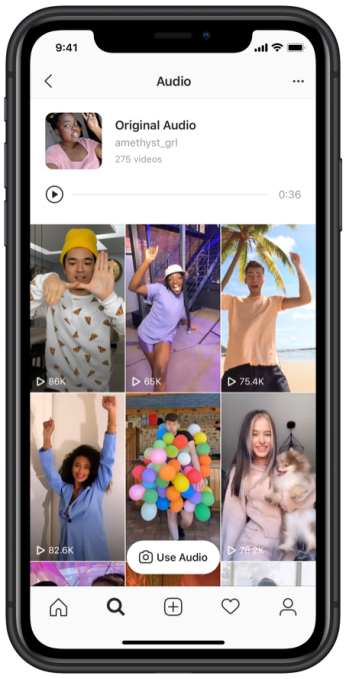
Instagram is expanding its TikTok competitor known as “Reels” to new markets, following its launch last year in Brazil. Starting today, Instagram is rolling out further access to Reels in France and Germany, allowing users to record short, 15-second video clips set to music or other audio, then share them on the platform where they have the potential to go viral.

The Reels feature is similar to TikTok in that it presents a set of editing tools that make it easier to film creative videos. At launch, for example, Reels offered a countdown timer, the ability to adjust the video’s speed, and other effects.

The company learned from its early tests in Brazil and has since rethought key aspects to the Reels experience.

Before, Reels were meant to be shared only within Instagram Stories. But the Instagram community said they wanted the ability to share Reels with followers and friends in a more permanent way, and also have the opportunity to expand that distribution more broadly if desired.

In addition, the community said they wanted a dedicated space where they could easily compile Reels and watch other people’s Reels.

With the expansion in Germany and France, Instagram has moved Reels to a dedicated space on the user Profile and in Explore — the latter for public accounts — so people can share with a new audience and share on their Instagram Feed, a company spokesperson tells TechCrunch.

These changes offer the chance for more exposure for both Reels and their creators, as Reels becomes more of a destination in the app — like the Stories row is today, for instance.

Reels are not Facebook’s first attempt at challenging TikTok’s growing popularity.

The Instagram parent company had previously launched short-form video app Lasso, but it has so far failed to gain significant traction. With Reels, however, Instagram is able to tap into its existing base of creators and leverage users’ familiarity with its video editing tools.

The challenge for Reels is in getting Instagram users to create a different type of content than they do today in Feed posts and in Stories. Those video tend to be more personal in nature — like clips from someone’s day or a vlog, for example. Meanwhile, more professional creator content has been relocated to IGTV.

TikTok videos, on the other hand, tend to be rehearsed and choreographed. Users learn a dance, perform a trick, make jokes, lip-sync to songs or audio, or replicate a popular meme in their own way. These videos are not typically off-the-cuff, as on Instagram. Encouraging this content requires a different editing tool set and workflow, which is what Reels offers.

Instagram didn’t say when it plans to roll out Reels globally or when it expects to bring the product to the U.S., but says the further expansion will allow the company to continue to build on the existing experience and evolve the product.


source https://techcrunch.com/2020/06/24/instagram-expands-its-tiktok-clone-reels-to-new-markets/